How to Pack Light for a Month-Long Trip: The Ultimate Minimalist Guide

James Whitfield
24 June 2026
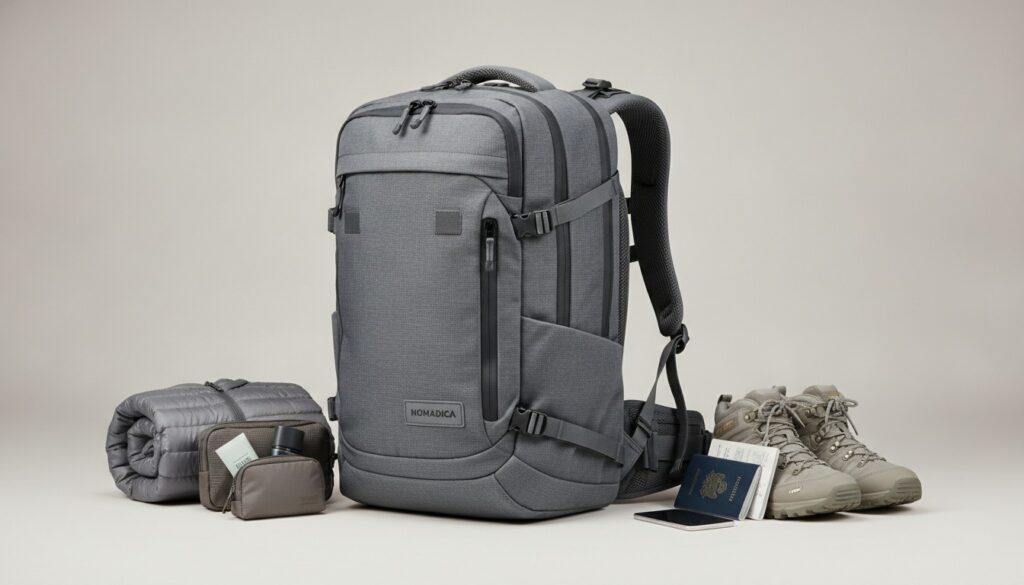
How to Pack Light for a Month-Long Trip: The Ultimate Minimalist Guide
Dragging a heavy suitcase through cobblestone streets is nobody’s idea of adventure. Learn the exact packing system seasoned travelers use to fit everything they need into a single carry-on — even for trips lasting four weeks or more.
Introduction
Picture this: you’re sprinting through a train station in Rome, your connection leaves in three minutes, and you’re wrestling a 50-pound suitcase down a narrow staircase with no elevator in sight. Sound familiar? Now imagine the same scenario — except you’re gliding through the crowd with a single lightweight backpack slung over your shoulder, hands free, stress minimal.
That’s the power of packing light.
Whether you’re a digital nomad heading to Southeast Asia, a retiree embarking on a European grand tour, or a budget traveler backpacking through South America, learning to pack light for a month-long trip is one of the most transformative travel skills you can develop. It saves you money on baggage fees, time at airports, and energy on the road. Most importantly, it gives you freedom — the freedom to move quickly, adapt to changes, and focus on the experience rather than your luggage.
In this guide, I’ll walk you through the exact system I use to pack everything I need for a four-week trip into a single carry-on bag. We’ll cover mindset shifts, wardrobe strategies, packing techniques, toiletry hacks, and the gear that makes it all possible. By the end, you’ll wonder why you ever checked a bag.
Let’s dive in.
Section 1: The Minimalist Packing Mindset
Before you even open your closet, you need to shift your thinking. Packing light isn’t about deprivation — it’s about intentionality. The goal isn’t to suffer through a month with one outfit. The goal is to bring only what genuinely serves you and leave behind everything that doesn’t.
The “What If” Trap
The number one enemy of light packing is the phrase “What if…?”
- What if it gets cold?
- What if I get invited to a fancy dinner?
- What if I need hiking boots AND sandals AND dress shoes?
- No checked baggage fees — save $30–$60 per flight
- No waiting at baggage claim — walk straight out of the airport
- No risk of lost luggage — your bag is always with you
- Greater mobility — navigate buses, trains, tuk-tuks, and cobblestone streets with ease
- Faster decision-making — fewer items mean fewer choices each morning
- 3–4 tops (mix of short-sleeve and long-sleeve)
- 2 bottoms (one casual, one slightly dressier)
- 1 dress or versatile outfit (for nicer occasions)
- 1 light jacket or layering piece (a packable down jacket or merino hoodie)
- 1 rain shell (doubles as a windbreaker)
- 5–7 pairs of underwear
- 3–4 pairs of socks
- 1 pair of walking shoes (worn on travel days)
- 1 pair of sandals or flip-flops
- 1 swimsuit
- Merino wool — naturally odor-resistant, temperature-regulating, quick-drying, and incredibly soft. Perfect for tops and socks.
- Nylon and polyester blends — lightweight, durable, and wrinkle-resistant. Great for pants and shorts.
- Tencel/Lyocell — a sustainable fabric that drapes beautifully, resists odor, and feels luxurious. Excellent for dressier pieces.
- Medium cube — tops and layers
- Medium cube — bottoms and dress clothes
- Small cube — underwear and socks
- Slim cube — dirty laundry (keeps it separate from clean clothes)
- Rolling — Best for casual clothes like t-shirts, underwear, and pajamas. Saves space and reduces wrinkles.
- Folding — Best for structured items like dress shirts or blazers. Use tissue paper between folds to prevent creasing.
- Bundle wrapping — An advanced technique where you wrap clothes around a central core object (like a packing cube). Virtually eliminates wrinkles but takes more time.
- Bottom layer — Heavy, dense items (shoes, toiletry bag)
- Middle layer — Packing cubes with clothing
- Top layer — Items you’ll need quick access to (jacket, electronics, travel documents)
- External pockets — Passport, phone, earbuds, snacks
- Use solid toiletries — Shampoo bars, conditioner bars, and solid deodorant eliminate liquid restrictions and last longer than their bottled counterparts.
- Decant into travel containers — If you must bring liquids, transfer them into 1 oz or 2 oz silicone bottles. You don’t need a full-size bottle of anything for a month.
- Buy basics at your destination — Sunscreen, toothpaste, and body wash are available everywhere. Don’t waste precious bag space on items you can pick up at any pharmacy.
- Multi-use products — A tinted moisturizer with SPF replaces foundation, moisturizer, and sunscreen. Dr. Bronner’s castile soap works as body wash, shampoo, laundry detergent, and dish soap.
- Phone + charger (your camera, map, translator, and entertainment system in one device)
- Universal power adapter (one adapter, every country)
- Portable battery pack (10,000 mAh is the sweet spot — enough for 2–3 full phone charges)
- Earbuds or headphones
- E-reader (optional, but saves the weight of multiple books)
- Laptop or tablet (only if you need it for work)
- Passport and one photocopy (stored separately)
- Travel insurance card or confirmation
- Two credit/debit cards from different banks (in case one gets blocked)
- A small amount of local currency for arrival
- Digital copies of all important documents stored in cloud storage
- Sink washing — The fastest and cheapest option. Wash items in the sink with a dab of travel laundry soap (or a Dr. Bronner’s), wring them out, and hang them to dry. Merino wool and synthetic fabrics dry overnight.
- Laundromats — Available in most cities worldwide. Budget about $5–$10 per load. A great opportunity to people-watch or catch up on reading.
- Hotel/hostel laundry service — Convenient but often pricier. Some hostels offer free or cheap washing machines.
- Portable laundry tools — A Scrubba wash bag (a portable washboard in a dry bag) or a universal sink stopper and travel clothesline can make sink washing much easier.
- [ ] 3–4 tops (merino wool or synthetic)
- [ ] 2 bottoms (quick-dry, versatile)
- [ ] 1 dress/nice outfit
- [ ] 1 packable jacket
- [ ] 1 rain shell
- [ ] 5–7 underwear
- [ ] 3–4 socks (merino wool)
- [ ] 1 walking shoes (worn)
- [ ] 1 sandals
- [ ] 1 swimsuit
- [ ] Shampoo bar + conditioner bar
- [ ] Solid deodorant
- [ ] Toothbrush + small toothpaste
- [ ] Sunscreen (or buy on arrival)
- [ ] Medications + first aid basics
- [ ] Multi-use soap
- [ ] Phone + charger
- [ ] Universal adapter
- [ ] Portable battery
- [ ] Earbuds
- [ ] E-reader (optional)
- [ ] Packing cubes (3–4)
- [ ] Travel towel (microfiber)
- [ ] Reusable water bottle
- [ ] Small daypack (packable)
- [ ] Travel clothesline
- [ ] Sink stopper
- [ ] Sunglasses
- [ ] Hat or buff
- Choose your bag — Pick a carry-on-sized backpack or bag (40–45 liters) and commit to fitting everything inside.
- Audit your wardrobe — Identify versatile, quick-dry pieces in a coordinating color palette.
- Invest in packing cubes — Even a basic set will revolutionize your packing.
- Practice — Do a trial pack before your trip. Lay everything out, pack it up, and then remove 20%. Yes, really.
Pro Tip: Before adding any item to your packing list, ask yourself: “Will I use this at least three times during my trip?” If the answer is no, leave it behind.
The One-Bag Philosophy
Seasoned minimalist travelers follow a simple rule: everything must fit in one bag that qualifies as a carry-on. This typically means a bag that is 45 liters or smaller and meets airline size restrictions (usually around 22″ x 14″ x 9″).
Why one bag?
Section 2: Building Your Capsule Travel Wardrobe
Clothing is where most travelers go wrong. The secret to packing a month’s worth of outfits into a carry-on is building a capsule travel wardrobe — a small collection of versatile, mix-and-match pieces that work together in multiple combinations.
The Magic Numbers
For a month-long trip, here’s the clothing formula that works in virtually any climate:
Fabric Is Everything
The key to making this work is choosing the right fabrics. Forget cotton — it’s heavy, slow to dry, and wrinkles easily. Instead, prioritize:
Pro Tip: Merino wool t-shirts can be worn 3–5 times between washes without developing odor. This is the single biggest hack for packing light. Brands like Wool & Prince, Icebreaker, and Smartwool make excellent options.
The Color Strategy
Choose a neutral color palette — think black, navy, gray, olive, and white — with one or two accent colors. When every piece in your wardrobe coordinates with every other piece, you can create dozens of outfit combinations from just a handful of items.
For example, with 4 tops and 2 bottoms, you already have 8 unique outfits. Add a jacket, swap accessories, and roll up your sleeves differently, and you’ll never look like you’re wearing the same thing twice.
Section 3: The Packing System — Techniques That Save Space
Now that you know what to pack, let’s talk about how to pack it. The right technique can reduce your clothing volume by up to 30%.
Packing Cubes: Your New Best Friend
If you take one piece of advice from this entire article, let it be this: use packing cubes. These lightweight zippered organizers compress your clothing and keep your bag meticulously organized.
Here’s a typical packing cube setup:
Rolling vs. Folding vs. Bundle Wrapping
There are three main packing techniques, and each has its place:
The Layered Loading Method
When loading your bag, think in layers:
Section 4: Toiletries, Tech, and Everything Else
Toiletries: Go Small or Go Home
Toiletries are the second biggest space hog after clothing. Here’s how to minimize them:
Pro Tip: Pack all liquids in a clear, quart-sized bag so you can breeze through airport security without repacking.
Tech Essentials
For most travelers, the tech packing list looks like this:
Documents and Money
Section 5: Laundry on the Road — The Secret Weapon
Here’s the truth that makes month-long carry-on travel possible: you’re going to do laundry. And that’s perfectly fine.
Your Laundry Options
Pro Tip: Wash your clothes in the evening and hang them near an open window or in front of a fan. By morning, everything will be dry and ready to wear.
The Ultimate Month-Long Packing Checklist
Here’s a quick-reference checklist you can screenshot or print:
Clothing:
Toiletries:
Tech:
Accessories:
Conclusion
Packing light for a month-long trip isn’t about sacrifice — it’s about smart choices. By embracing a minimalist mindset, building a capsule wardrobe with high-performance fabrics, using space-saving packing techniques, and planning for laundry on the road, you can comfortably travel for four weeks (or longer!) with nothing more than a single carry-on bag.
The benefits are enormous: less stress, more freedom, lower costs, and a travel experience that’s focused on living rather than lugging. Every seasoned traveler I know has gone through the same evolution — from overpacking to packing just right. And once you experience the lightness of traveling with less, you’ll never go back.
Remember: the best travelers aren’t the ones with the most stuff. They’re the ones who need the least.
Your Turn: Start Packing Smarter Today
Ready to transform the way you travel? Here’s your action plan:
And if you found this guide helpful, don’t forget to share it with a fellow traveler who’s still overpacking. They’ll thank you later. 😉
Happy travels,
Emma Davis