Hidden Gems of Southeast Asia: Beyond the Tourist Trail

James Whitfield
24 June 2026
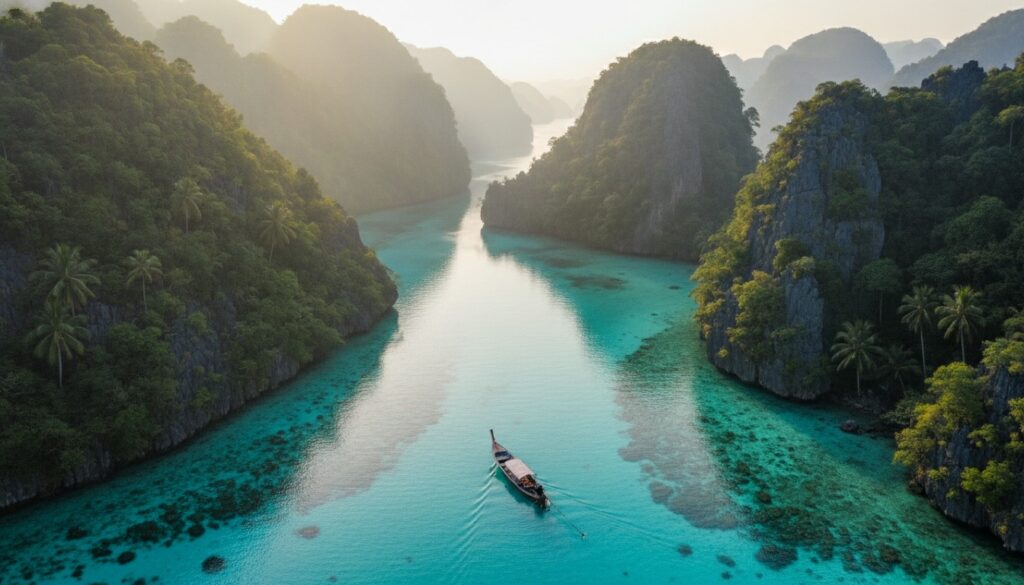
Hidden Gems of Southeast Asia: Beyond the Tourist Trail
Southeast Asia has long been a magnet for travelers seeking ancient temples, pristine beaches, and vibrant street food scenes. But if your idea of exploring this incredible region starts and ends with Angkor Wat, Bali’s rice terraces, and Bangkok’s Khao San Road, you’re only scratching the surface. Beneath the well-worn tourist trail lies a world of secret waterfalls cascading into emerald pools, remote villages where time seems to stand still, and untouched islands where you might be the only footprint on the sand.
As someone who has spent years crisscrossing this region — often with nothing more than a backpack and a willingness to get lost — I can tell you that the real magic of Southeast Asia lives in the places most travelers never see. In this guide, I’ll take you beyond the guidebook highlights and reveal the hidden gems that will transform your next trip into something truly extraordinary.
Why Go Off the Beaten Path?
Before we dive into specific destinations, let’s address the obvious question: why bother leaving the tourist trail at all?
The answer is simple. Overtourism is real, and it’s reshaping some of Southeast Asia’s most beloved destinations. Maya Bay in Thailand was famously closed for years to allow its ecosystem to recover. Boracay in the Philippines underwent a six-month rehabilitation. The temples of Bagan in Myanmar now have restricted climbing areas.
But beyond environmental concerns, there’s a deeper reason to seek out hidden gems:
“Travel is not about ticking off landmarks. It’s about the conversations you have with strangers, the meals you share in someone’s home, and the moments that catch you completely off guard. Those moments almost never happen in a crowd.”
When you venture off the beaten path, you experience:
- Authentic cultural exchanges with communities that haven’t been shaped by mass tourism
- Dramatically lower costs — accommodation, food, and transport can be a fraction of tourist-hub prices
- Unique stories that no one else at the dinner party will have
- A sense of genuine discovery that reignites the wonder of travel
- Rent a semi-automatic motorbike in Ha Giang city ($8-12/day) or hire an “easy rider” guide ($30-50/day including bike)
- Allow 3-4 days to complete the loop comfortably
- Homestays along the route cost $5-10 per night, often including dinner and breakfast
- The best months are September through November, when the rice terraces are golden and the buckwheat flowers bloom pink and white
- Pack out everything you pack in. Many remote areas have no waste management infrastructure.
- Support local economies by staying in locally-owned guesthouses and eating at family-run restaurants rather than international chains.
- Ask permission before photographing people, especially in ethnic minority communities.
- Avoid sharing exact GPS coordinates on social media for extremely fragile or remote locations. A vague description protects the place while still inspiring others.
- Learn about local customs before visiting indigenous communities. In many highland villages, there are protocols around entering homes, touching sacred objects, or photographing ceremonies.
The Secret Islands: Paradise Without the Crowds
Koh Rong Samloem, Cambodia
While neighboring Koh Rong has rapidly developed into a party destination, Koh Rong Samloem remains its quieter, more beautiful sibling. Saracen Bay offers powdery white sand and turquoise water that rivals anything in the Maldives — at a fraction of the cost. But the real treasure is Lazy Beach, accessible only by boat or a jungle trek, where a handful of rustic bungalows sit beneath coconut palms.
How to get there: Take a ferry from Sihanoukville (approximately $12-15 USD, 45 minutes). Book accommodation in advance during peak season (November–March), as options are limited.
Budget tip: Bungalows on the island start at around $15-25 per night. Bring cash — ATMs are nonexistent.
The Mergui Archipelago, Myanmar
Imagine over 800 islands scattered across the Andaman Sea, most of them completely uninhabited. The Mergui Archipelago was closed to foreigners until 1997, and even today, visitor numbers remain incredibly low. The islands are home to the Moken people, semi-nomadic sea gypsies who have lived on these waters for centuries.
Snorkeling here is world-class, with coral reefs that have been largely untouched by human activity. You’ll swim alongside manta rays, reef sharks, and schools of tropical fish in water so clear it feels like floating in air.
How to get there: Most visitors access the archipelago via liveaboard boats departing from Kawthaung or Ranong (on the Thai side). Permits are required and are typically arranged by tour operators. Expect to pay $150-300 per day for a liveaboard experience.
Caramoan Islands, Philippines
While El Nido and Coron dominate Instagram feeds, the Caramoan Peninsula in the Bicol region offers equally stunning limestone karst scenery with virtually no tourists. Hidden lagoons, cathedral-like caves, and beaches framed by dramatic rock formations await those willing to make the journey.
How to get there: Fly to Naga City, then take a van to Sabang Port (2-3 hours), followed by a boat to Caramoan. The journey is part of the adventure — and the reward is worth every bumpy mile.
Forgotten Villages and Mountain Communities
Ha Giang Loop, Vietnam
Forget Ha Long Bay for a moment. The Ha Giang Loop in Vietnam’s far north is, in my opinion, the single most spectacular road trip in all of Southeast Asia. This 350-kilometer motorbike loop winds through jaw-dropping mountain passes, terraced rice paddies that cascade down impossibly steep slopes, and ethnic minority villages where the Hmong, Tay, and Dao people maintain centuries-old traditions.
The Ma Pi Leng Pass — often called the “Happiness Road” — offers views so dramatic they’ll make you pull over every few hundred meters just to stare. Below, the Nho Que River carves a turquoise ribbon through a canyon that feels like it belongs in another world.
Practical tips:
Hsipaw, Myanmar
Tucked into the Shan Highlands, Hsipaw (pronounced “See-paw”) is a sleepy town that serves as a gateway to some of Myanmar’s most rewarding trekking. Multi-day hikes take you through Shan and Palaung villages where families invite you in for tea, children practice English with eager curiosity, and the night sky blazes with stars undimmed by light pollution.
Don’t miss: The sunrise over the Dokhtawady River, the crumbling Shan palace in town, and the trek to Pankam village (a moderate 2-day, 1-night trek that most guesthouses can arrange for $15-25 per person).
Munduk, Bali, Indonesia
Yes, Bali has hidden gems too — you just need to head north. While the south coast drowns in traffic and tourist traps, Munduk sits in the cool highlands surrounded by clove plantations, coffee farms, and misty waterfalls. The village offers a glimpse of what Bali felt like decades ago: peaceful, spiritual, and deeply connected to the land.
Hike to the twin waterfalls of Banyumala, widely considered Bali’s most beautiful cascade, where you’ll likely share the natural pool with no more than a handful of other visitors. Compare that to the selfie-stick chaos at Tegenungan, and the choice is clear.
Secret Waterfalls and Natural Wonders
Southeast Asia is blessed with an abundance of natural beauty, and some of its most spectacular waterfalls remain remarkably under-visited.
Kuang Si Falls’ Hidden Upper Pools, Laos
Everyone visits the main cascade at Kuang Si Falls near Luang Prabang — and for good reason, it’s stunning. But most visitors never explore the upper trails that lead to a series of secluded turquoise pools above the main falls. A 20-minute scramble up a sometimes-muddy trail rewards you with your own private swimming hole, surrounded by jungle and serenaded by birdsong.
Thi Lo Su Waterfall, Thailand
Located in the Umphang Wildlife Sanctuary near the Myanmar border, Thi Lo Su is Thailand’s largest waterfall — and one of the most spectacular in all of Asia. The journey to reach it involves a winding mountain road, a river rafting trip, and a jungle trek. This inaccessibility is precisely what keeps it pristine.
Best visited: During and just after the rainy season (August–November) when the falls are at their most powerful. The road can be challenging, so a 4WD vehicle or guided tour is recommended.
Tad Fane Waterfall, Laos
On the Bolaven Plateau in southern Laos, Tad Fane plunges 120 meters in twin cascades into a deep gorge shrouded in mist and jungle. It’s one of the tallest waterfalls in Southeast Asia, yet receives a tiny fraction of the visitors that flock to northern Laos. For the adventurous, a zipline crosses directly over the falls — an experience that is equal parts terrifying and exhilarating.
Practical Tips for Finding Your Own Hidden Gems
The destinations above are just the beginning. Here’s how to discover your own secret spots:
1. Talk to Locals, Not Just Other Travelers
The backpacker grapevine is useful, but it tends to circulate the same “secret” spots until they’re no longer secret. Instead, ask guesthouse owners, tuk-tuk drivers, and market vendors where they go on their days off. Some of my most memorable experiences came from following a local’s hand-drawn map to a swimming hole or a family-run restaurant.
2. Use Local Transportation
Tourist shuttles take you from highlight to highlight. Local buses, shared minivans, and ferries take you through the spaces in between — and that’s where the magic often hides. Yes, it’s slower. Yes, it’s less comfortable. But the village you discover during an unplanned stop is worth every cramped minute.
3. Learn a Few Phrases
Even basic greetings in the local language open doors that remain firmly shut to those who only speak English. Learn hello, thank you, delicious, and how much? in every country you visit. The smiles you receive in return are priceless.
4. Travel in the Shoulder Season
The “best” time to visit Southeast Asia according to most guides is the dry season (November–February). But the shoulder months of March, September, and October offer fewer crowds, lower prices, and landscapes at their most lush and green. A brief afternoon rain shower is a small price to pay for having a waterfall to yourself.
5. Stay Longer in Fewer Places
“The traveler sees what he sees. The tourist sees what he has come to see.” — G.K. Chesterton
Resist the urge to cram ten countries into three weeks. Instead, spend a week in one region and let it reveal its secrets to you slowly. The best experiences rarely happen on day one — they happen on day four, when the café owner recognizes you and invites you to her daughter’s wedding.
Responsible Travel: Protecting These Hidden Gems
With the privilege of discovering untouched places comes a responsibility to keep them that way. Here are some principles to travel by:
Conclusion: The Best of Southeast Asia Is Still Waiting
Southeast Asia’s hidden gems aren’t hidden because they’re inferior to the famous attractions — they’re hidden because most travelers simply don’t look hard enough. The region’s true soul lives in the mist-shrouded mountains of northern Vietnam, the uninhabited islands of Myanmar’s Mergui Archipelago, the thundering waterfalls of Laos’ Bolaven Plateau, and the quiet villages where a shared pot of tea becomes the highlight of your entire trip.
The tourist trail exists for a reason — Angkor Wat is magnificent, and Bangkok is electrifying. But if you only follow the well-marked path, you’ll miss the Southeast Asia that steals your heart and refuses to give it back.
So on your next trip, take the road less traveled. Board the local bus instead of the tourist shuttle. Say yes to the guesthouse owner’s invitation. Follow the trail past the main waterfall. The best stories in Southeast Asia are still waiting to be discovered — and they’re waiting for you.
Your Turn: Start Planning Your Off-the-Beaten-Path Adventure
Ready to go beyond the tourist trail? Start by choosing just one hidden gem from this list and building your itinerary around it. Research local transportation options, learn a few phrases in the local language, and leave room in your schedule for the unexpected.
Have you already discovered a hidden gem in Southeast Asia that we didn’t mention? Share it in the comments below — or better yet, keep it as your own beautiful secret. Either way, we’d love to hear about your off-the-beaten-path experiences.
Happy exploring, and remember: the best journeys begin where the guidebook ends.